
Safe, Supportive, and Scalable: How Behavioral Health Design Is Evolving
BEHAVIORAL HEALTH needs are rising faster than facilities can keep up. Across the country, providers are rethinking how care environments can reduce stress, support dignity, and create predictable, healing-centered experiences for patients and staff. This shift, toward flexible, trauma-informed, and deeply human design, is reshaping clinics, outpatient programs, and therapeutic environments of every scale.
The ABA Therapy Center is a clear example of this change in motion. Designed as a safe, supportive, and fully scalable model for growth, the center illustrates how intentional design can strengthen behavioral health outcomes and meet the evolving needs of the community. Every design decision reflects a broader industry movement: from normalized safety features to age-specific experience design to modular planning that future-proofs operations.
Designing for Safety Without Creating a Clinical Atmosphere
A defining trend in behavioral health today is the integration of safety measures that do not feel institutional. Providers and design teams are reimagining risk mitigation so safety becomes an invisible layer of support, not the experience patients notice first.
ABA Therapy Center brings this principle to life. Early engagement with therapists, behavior analysts, and staff shaped spatial decisions that balance protection with autonomy. Corridors lined with staff workstations allow for discreet oversight, while ligature-resistant fixtures are incorporated without interrupting the warm, approachable environment. Within suites, vestibules were also incorporated as an added layer of protection, helping prevent pediatric patients from exiting through the wrong door. It is a simple but important move that supports safety while preserving a calm, non-institutional experience.
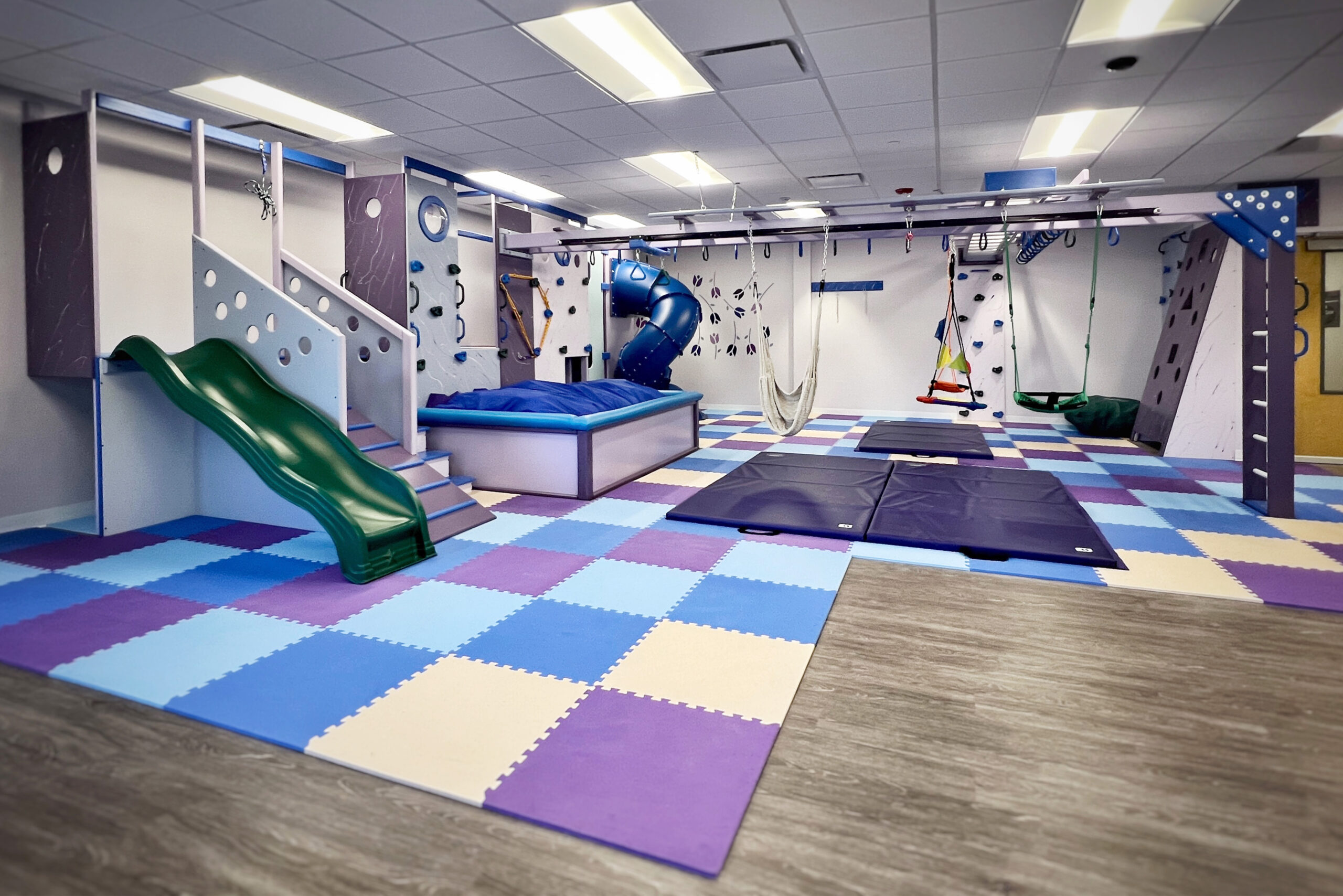
One of the most intentional safety strategies was eliminating dead-end corridors, which are known to contribute to escalated incidents. Instead, two large playrooms anchor the main patient corridor, creating open sightlines and natural circulation paths. The result is a layout where safety is embedded quietly and effectively, building trust without compromising comfort.
This reflects an industry-wide shift toward design solutions that feel residential, familiar, and dignified while still meeting rigorous safety standards. Behavioral health environments are increasingly measured by how well they protect and empower, and ABA shows how both goals can coexist.
Creating Therapeutic Spaces That Foster Belonging
Research and practice increasingly show that behavioral health environments improve engagement when they reflect the lived experiences, sensory needs, and developmental stages of their users. Across the country, facilities are incorporating trauma-informed design and age-responsive features to help patients feel grounded, respected, and in control. Just as important, they are designing for transition, recognizing that the path through a space can be as meaningful as the spaces themselves.
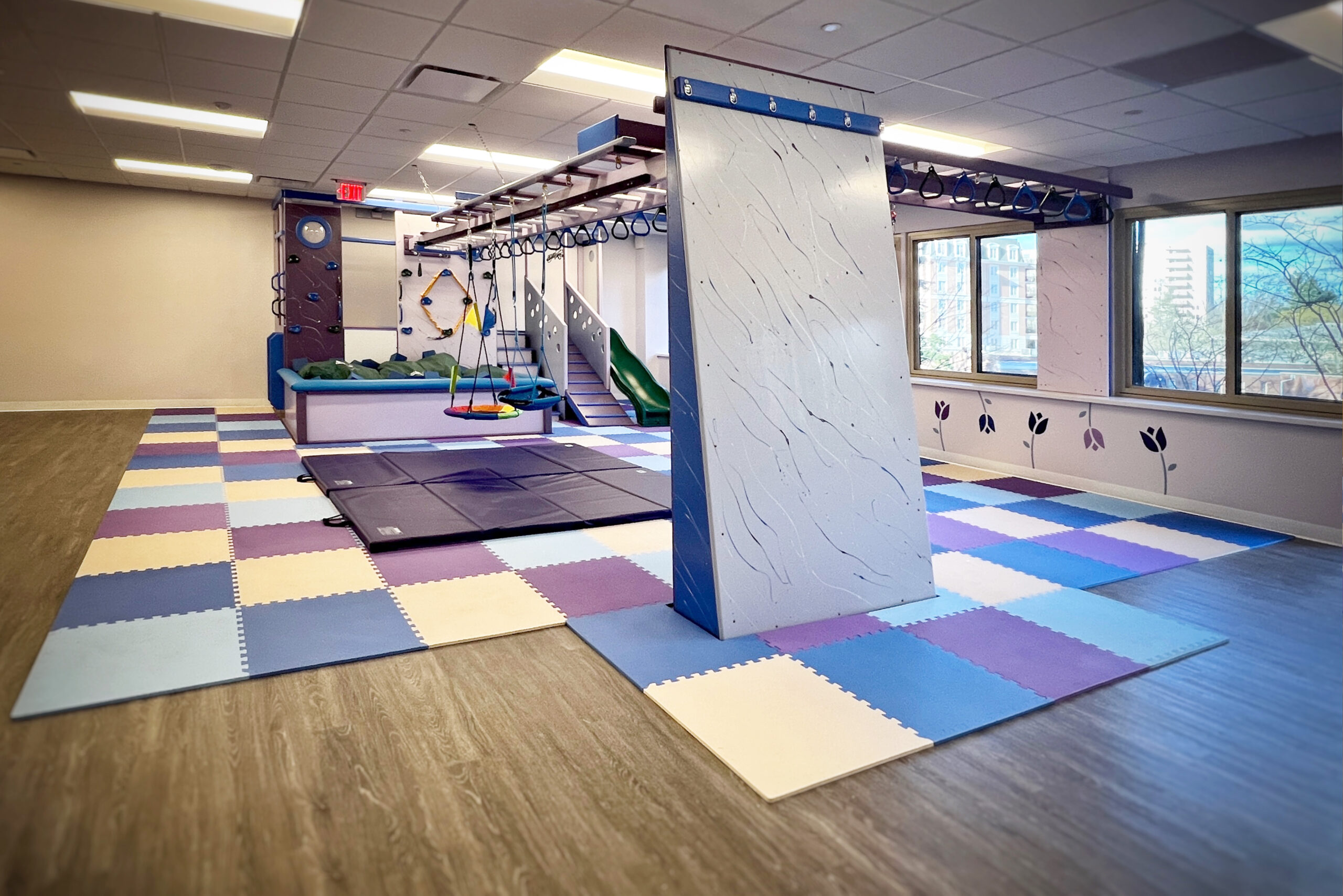
At ABA, this philosophy is foundational. The plan separates high- and low-stimulus zones so patients can transition between environments based on therapeutic needs. Check-in and waiting areas lead to therapy spaces, while quieter decompression areas support regulation before transitions and exiting. High-energy play zones are intentionally separated from quieter settings, creating a more predictable, supportive experience for children and giving staff greater flexibility in care delivery.
Each age group is also supported with spaces tailored to how they learn, self-regulate, and interact with their environment:
• Young children benefit from therapy rooms infused with play-focused elements that spark imagination while reinforcing stability and predictability.
• Teens are given a dedicated Chill Room designed for independence, privacy, and self-directed coping, an essential element in adolescent behavioral health.
• All patients experience environments with softness, natural light, and quiet sensory cues that reduce stress and encourage autonomy.
These decisions align with an emerging design priority: environments that adapt to the individual rather than requiring the individual to adapt to the environment. ABA’s use of biophilic elements, sensory calming strategies, and choice-driven zones echoes a broader movement toward behavioral health settings that feel welcoming, personalized, and grounded in dignity.
Building for Growth: Modular and Adaptive Planning
Behavioral health providers face rising demand, staffing shortages, and evolving treatment models, which challenges them to design spaces that can change without costly disruption. As a result, modular, standardized planning is becoming one of the most valuable tools in the industry.
ABA Therapy Center embraces this approach with a completely modular room strategy. Every therapy room, diagnostic suite, quiet room, teen space, and provider office shares the same footprint and infrastructure. This creates a flexible backbone that allows spaces to be reassigned, expanded, or adapted as programs and patient needs shift.
The benefits mirror key industry trends:
• Scalability without downtime, enabling agile responses to enrollment changes or therapy delivery models
• Operational efficiency, with predictable room layouts that simplify workflows
• Cost-effective expansion, by standardizing construction and eliminating future renovation complexities
A similar trend that is gaining momentum nationwide is adaptive reuse, where existing retail or medical spaces are repurposed into behavioral health clinics. ABA’s modular strategy is designed to complement this movement, creating a replicable, scalable template that can migrate to other sites as the organization grows.
Designing for Dignity, Engagement, and Long-Term Impact
Behavioral health design is entering a new era: one that centers dignity, personalization, staff well-being, and flexibility as critical components of care. The ABA Therapy Center demonstrates what this shift looks like in practice.
By blending invisible safety with age-specific environments, creating spaces that promote autonomy and emotional regulation, and building a scalable foundation for future growth, ABA positions itself not only as a therapy center but as a model for modern behavioral health design.
As the industry continues to evolve, the most impactful environments will be those that:
• prioritize trauma-informed principles
• integrate biophilic, sensory-aware, and choice-driven design
• support therapist and provider wellness
• plan for scalable, long-term growth
• strengthen connection, trust, and belonging
The ABA Therapy Center proves that when behavioral health spaces are intentionally crafted, they do more than house treatment. They help shape resilience, independence, and meaningful progress for every individual who walks through the door.