
Closer to Home: The Next Generation of Outpatient Care
HEALTHCARE HAS MOVED off hospital campuses and into the neighborhoods where people live and work. As the demand for patient convenience rises, outpatient centers carry the weight of delivering complex care independent of the equipment, resources, and multi-disciplinary teams a hospital campus provides.
For providers, meeting expectations requires outpatient centers to handle increasingly complex treatments, diagnostics, and infusions that previously required hospital-based settings. These facilities require careful coordination and planning to operate and perform at a high-level, and uphold patient standards and trust.
Fox Chase Cancer Center’s Buckingham outpatient center is a clear example of this model. Designed to deliver comprehensive oncology care in a calm, accessible, and future-ready environment, the center shows how thoughtful planning can bring the expertise of a major cancer institution closer to home without inheriting the hassle of a hospital environment.
Designing Care Around Everyday Life
Although it delivers simplicity, decentralization is a complex operation. While meeting the demand for high-level expertise, treatments, and care is one challenge, patients also expect convenience at every touchpoint. For outpatient centers, this means flexible online scheduling and integration, easier navigation and parking, and retail-oriented environments that feel less clinical and more personal.
Health systems, in turn, are looking to extend their reach through satellite locations that deliver real value rather than feeling like “lite” versions of the main campus, focusing heavily on maximizing provider utilization, improving operational performance through efficient staff workflows, and reducing patient wait and visit durations.
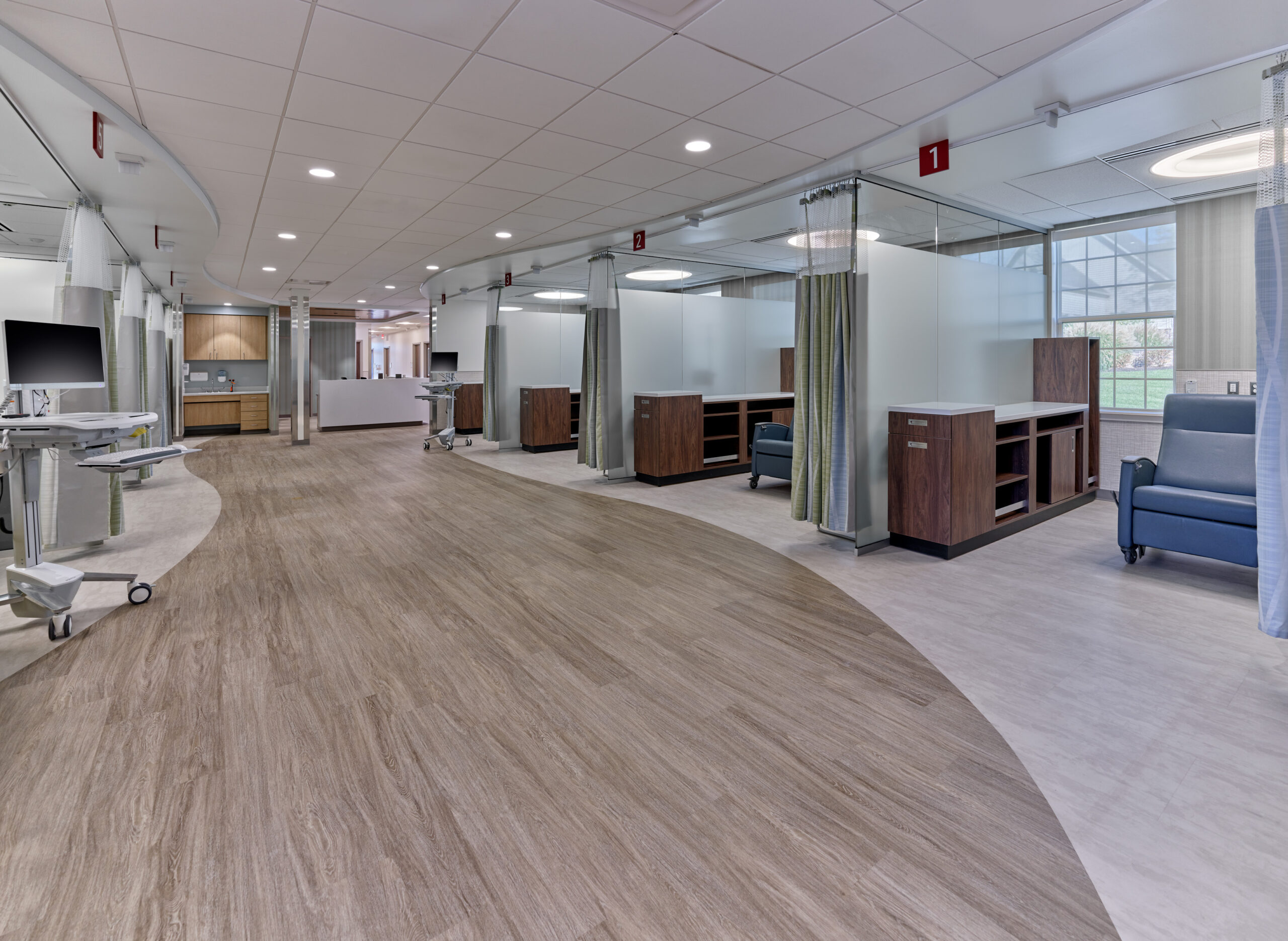
At Fox Chase, this shows up in the way the center is organized around everyday use. The layout prioritizes intuitive arrival and circulation, helping patients and families orient themselves quickly. Reconfigurable spaces, allow patients the freedom to socialize during long treatments, creating a positive healing environment through strong social support and connections. A centralized nurse station supports multiple functions, providing an infusion/exam hub, nerve center suite, and a landmark that aids wayfinding.
The result is an outpatient center that delivers the reassurance of a renowned cancer brand in an approachable setting that feels close to home and easy to access.
Creating Calmer, More Human Treatment Environments
Across specialized healthcare centers, like Fox Chase, there is growing recognition that the environment is part of the treatment plan. Spaces that reduce stress, support dignity, and promote calm can help patients and caregivers better cope with the demands of diagnosis, treatment, and follow-up.
Fox Chase puts this into practice through a series of intentional design decisions:
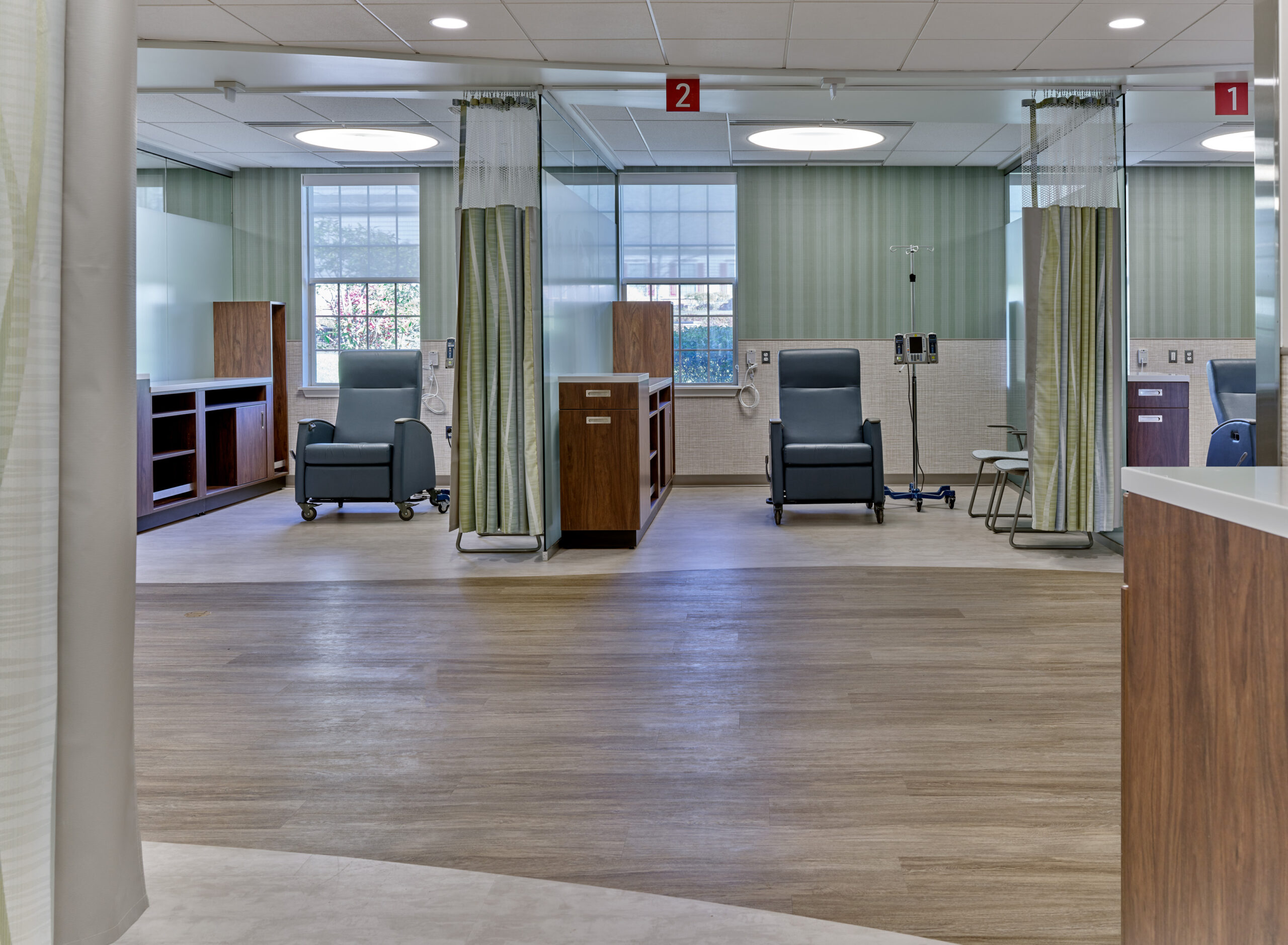
• Abundant natural light in waiting and infusion areas reduces the sense of time standing still on long treatment days and supports healthy sleep-wake rhythms.
• Warm, organic materials replace the cold, institutional palette many people associate with hospitals, helping patients feel more like guests.
• Tuned acoustics keep background noise low, creating quieter spaces where conversations with caregivers feel private and focused.
• Clear sightlines and gentle wayfinding help patients and families understand where they are at a glance, which is especially important when they are tired, anxious, or processing complex information.
These choices create an environment that is intentionally less clinical in feel, but no less rigorous in function. It is a calm, human backdrop for difficult conversations, complex treatments, and ongoing support.
Flexible Planning That Keeps Care Sustainable
As more diagnostics and treatments move into outpatient settings, space must work harder. Health systems need facilities that can flex with changing patient volumes, new service lines, and evolving models of care, all without constant renovation.
At Fox Chase planning was approached as a long-term operational strategy:
• Multi-use exam and consult rooms can be shared across providers and programs, allowing the center to adapt quickly if demand shifts.
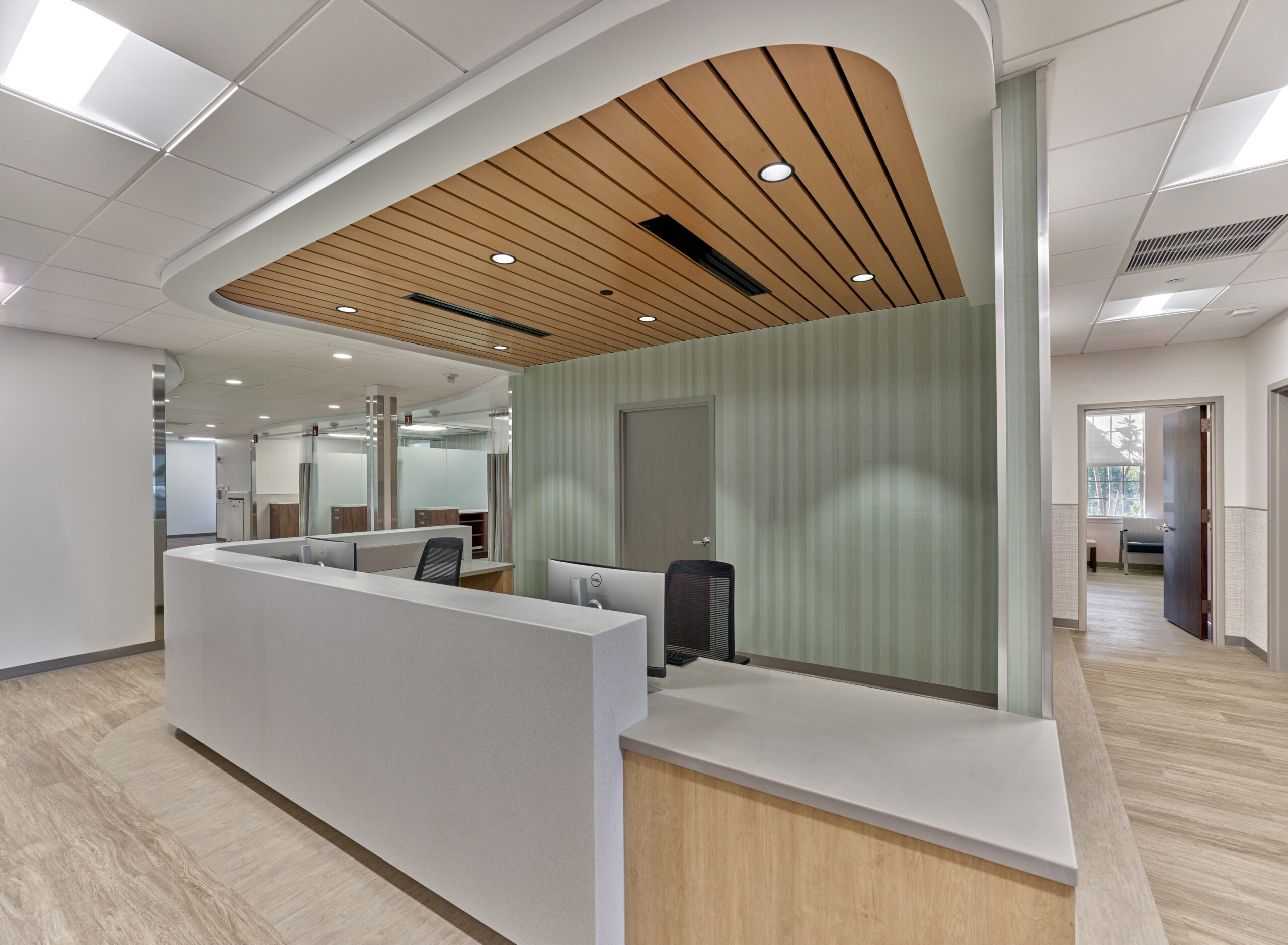
• Shared staff work zones support team-based care, reduce duplicated support space, and strengthen collaboration among clinicians.
• “Plug-and-play” clinical bays allow equipment and room functions to evolve over time without reconfiguring walls or infrastructure.
This modular, flexible approach keeps capital focused on what matters most while maintaining the ability to add services or adjust care pathways as needs change. It reflects a broader trend in outpatient treatment: centers must be nimble enough to evolve, but stable enough to support long-term relationships with patients.
Building Future-Ready, Community-Anchored Cancer Centers
The next era of cancer care will be shaped by advances in imaging, precision therapies, robotics, and AI-enabled workflows, alongside a stronger emphasis on digital engagement and data-informed decision-making. Outpatient centers are becoming important test beds for this change.
Fox Chase is built with that future in mind. Power and data capacity exceed current needs, creating a backbone for new equipment, sensors, and digital tools. Exam and treatment rooms are sized and planned to accommodate evolving technology footprints, remote monitoring, and new care models without major disruption. Back-of-house routes are organized for efficient staff movement and service delivery, so upgrades can happen with minimal impact on the patient experience.
At the same time, the center is firmly grounded in its community. Patients who once had to travel to the main campus now have access to expert care much closer to home, reducing time away from work, school, and family. The environment reinforces Fox Chase’s promise of compassionate, high-level oncology care delivered in a way that feels accessible, familiar, and responsive.
As outpatient care continues to evolve, the most impactful environments will be those that:
• bring specialized care closer to where people live and work
• prioritize calm, human-centered experiences for patients, families, and staff
• use flexible, modular planning to stay responsive and financially sustainable
• build in robust infrastructure for future technologies and digital tools
• strengthen community connection and long-term trust in the health system
Fox Chase Cancer Center shows that when outpatient centers are intentionally designed, they do more than house treatment. They extend the reach of expert care, support resilience, and make the patient journey feel a little more grounded, guided, and possible for every person who walks through the door.